Feb 22, 2024
Schools are always busy in South Sudan in February. The academic year here runs differently from Ireland and England, with our long holidays based around Christmas. So the back to school trials and tribulations began earlier this month. Students have to register for their studies, including paying their fees. When you have a number of children, this can be a substantial amount of money. Usually, the Catholic schools charge the equivalent of two bags of charcoal or just one chicken for the entire year. The underlying ethos is education is for everyone, but everyone should contribute something, insofar as they can. For Loreto, the fee includes a daily meal, their school books, treatment in our clinic (malaria is still around, and never, ever underestimate the number of scrapes 1,300 children can get into), and of course their studies.
We had our opening Mass for the Upper Primary children last Friday and I spoke to them about the great gates of the world, such as the Gate of India in New Delhi, the Golden Gate in Jerusalem, and the Arc du Triomphe in Paris (technically not a gate I know, but the kids were most impressed with the photo). Then we talked about the gate to Loreto Primary School. While nowhere near as famous, elegant, or ancient, they are beautiful in their own way.
The fact that these young children can come through those gates every day, in a country that is largely at peace right now, is a gift. As we do the school runs in Ireland, stuck in traffic, with the rain beating relentlessly against the windscreen, we can easily take this for granted. Here, the peace we are enjoying is a blessing and not one easily forgotten. Just to our north, our immediate neighbours, Sudan, are in the grip of a savage civil war for the last ten months, from which will emerge only losers. The devastation will set back the country by a generation at least and the suffering has been immeasurable. In South Sudan, we are still building here after decades of conflict, and we are aware of how quickly it can all be taken away.
A sign of things to come
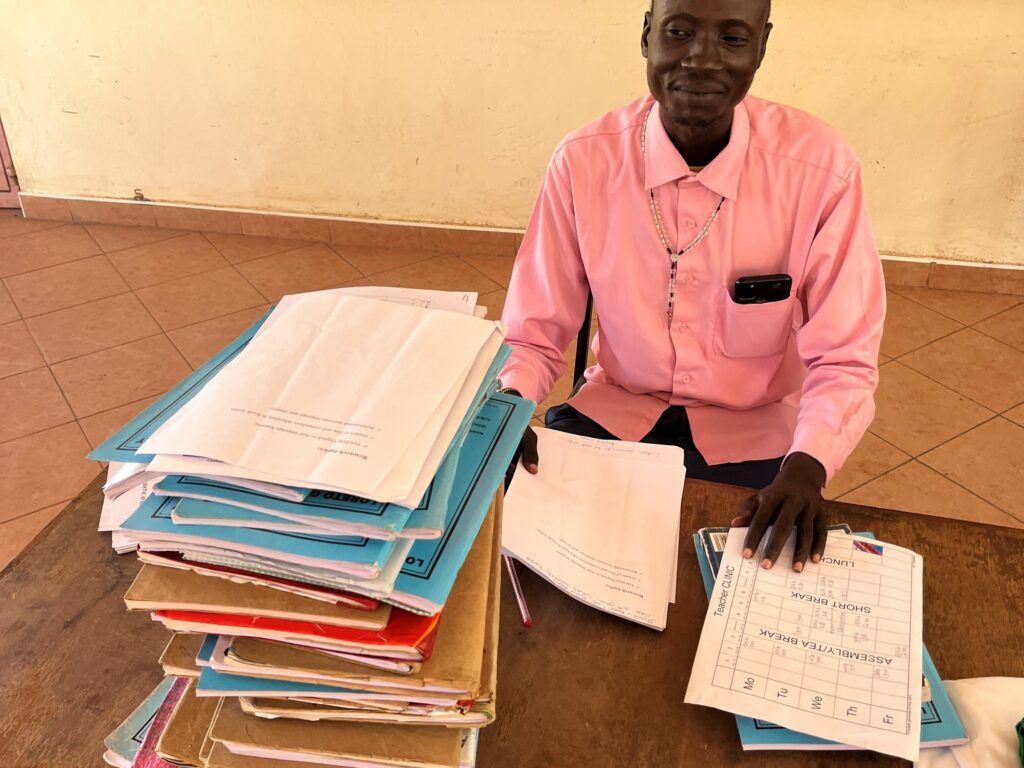
Thankfully, in the Catholic University, education continues to flourish too. This is in large part due to the generosity of our MSC benefactors, who have helped us fund the complete renovation of the library, as well as the purchase of blackboards and chairs for our lecture rooms. Just this morning I joined one of our students on his first visit to the school where he will have his teaching placement. It’s wonderful to see. Over the course of the next twelve weeks, he and his classmates will experience what teaching in secondary schools is really like. It will be a steep learning curve for them, as a classroom filled with fifty teenagers in the throes of teenage angst can be a tough crowd to please. Increasingly though, the youth are seeing the value in education and the depth of their commitment is impressive. When our students graduate, they will be among the first properly trained teachers who have qualified from Catholic University in Rumbek. It is a sign hopefully of things to come.
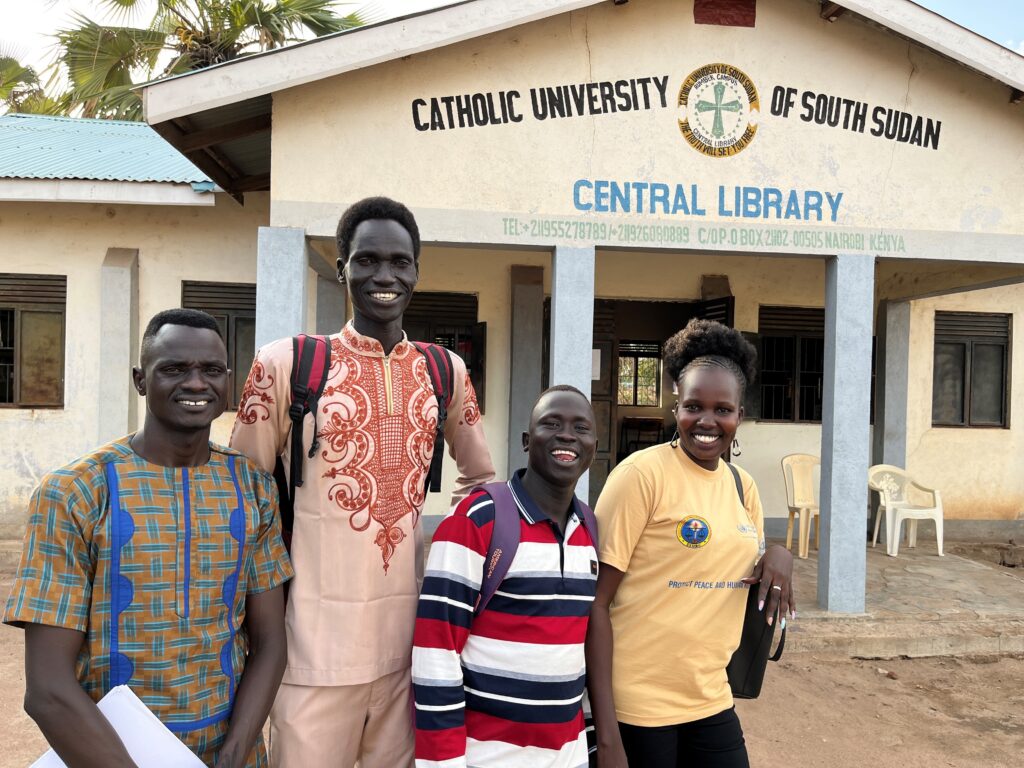
The rest of the University students are sitting midterm exams at the moment. There is no better incentive for them to commit themselves to their studies. Just outside my office window, a number of our final year business administration students are having a small group discussion. It’s something quite typical of any university, but the fact that four of the five participants are women is something that is decidedly atypical here. In total, just over a third of our students are women, up from just twenty percent two years ago. There’s a lot to be done still, but at least we’re moving in the right direction. As I write this, there does seem to be a lot of laughter coming from them. Perhaps I have underestimated the fun that is to be had from managerial economics.
Nhialic ke yin (or God bless you),
Fr Alan
Selected images courtesy of Paul Jeffries.
Read more from Fr Alan’s missionary journey in South Sudan:
Jan 31, 2024
With the dawn of a new year, the team at the Holy Family Care Centre in Ofcolaco, South Africa, have hit the ground running. With more than 10 children joining the community at the centre in the space of a few days, the centre’s director Sr Sally Duigan writes, “The new year – and especially the school year – has got off to a very action-packed start!”
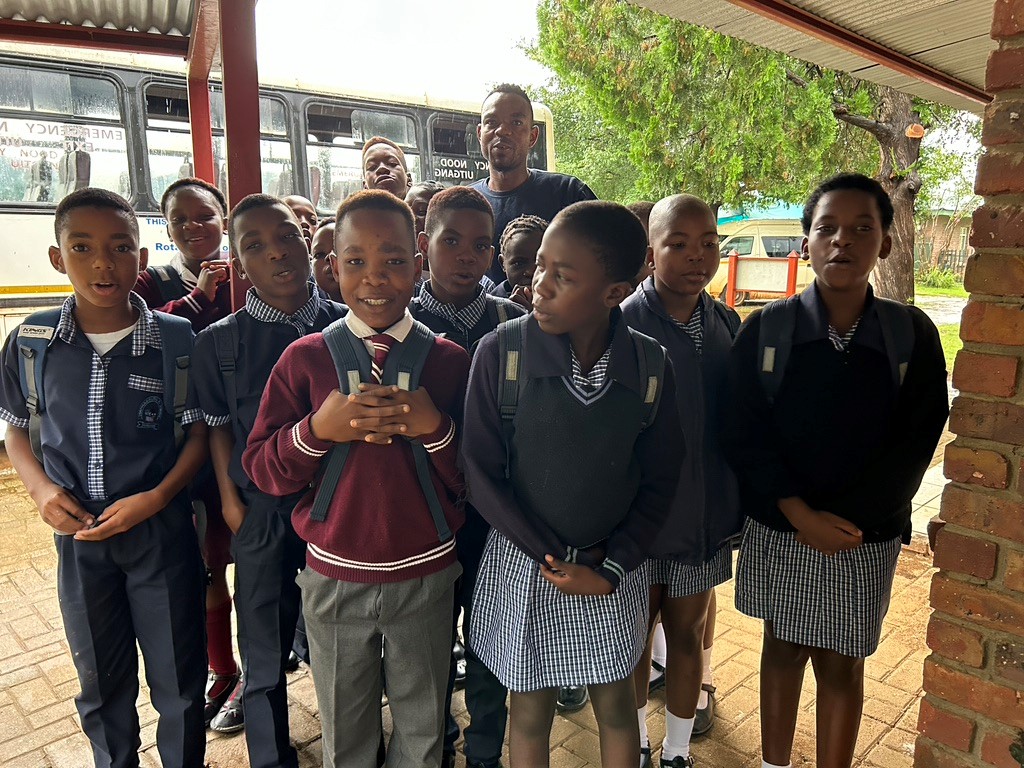
Founded in 2002 in the Limpopo Province of South Africa, the Holy Family Care Centre has been providing care for young children who are very ill, often with HIV, for over 20 years. Many of these children have been orphaned or abandoned, and have nowhere else to go. Run by the Daughters of Our Lady of the Sacred Heart, with the support of the MSC, the centre can accommodate 70 children and is stretched to capacity with many children needing urgent care.
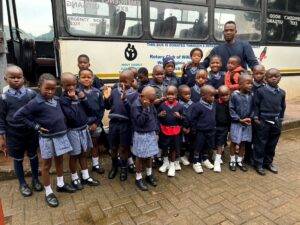
Welcoming new manager JJ
The team at Holy Family recently welcomed a new manager, Jeanette Joalane Lesise, affectionately known as JJ.
“I never knew or even thought that I would ever leave the City of Gold, the hub of Gauteng to Ofcolaco,” writes JJ in an update on the Holy Family website. “Here I am, in the middle of mango and sweet corn farms. Surrounded by nature, fresh breezes of air, sweet melodies of birds, beautiful sunsets, hot summer days and showers of rain as the sun goes down.”
“I am surrounded by love, joy and happiness,” JJ continues, describing herself as a “special mom to 76 kids”. “These bundles of joy are from 0 to 18 years old. Upon my appointment, Lerato* was my first, a 4-day old baby girl. After three days here at Holy Family Care Centre… I had my first experience of welcoming a three-year-old Mpho. Well, Mpho* was temporarily placed with us and 4 days later his social worker fetched him to be placed with his relative who was willing to be his guardian. As for Lerato, she will be raised here unless of course, through the mercy of God she is adopted or fostered.”
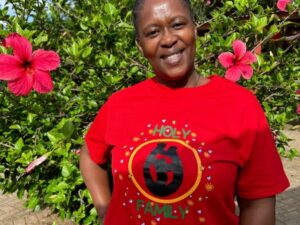
“Holy Family Care Centre is a home away from home, for myself, for passionate Daughters of Our Lady of the Sacred Heart, the wonderful staff, the committed volunteers, and all children placed on our doorstep. This is now my life,” she finishes.
Grade 12 scholars
On January 24th, JJ attended the local high school, where a celebration took place for the Grade 12 class of 2023. Sr Sally tells us, “We are very proud of two of our girls, who just obtained their Grade 12 certificates. It is the first time we have had children in Grade 12 and we are very proud of them.”
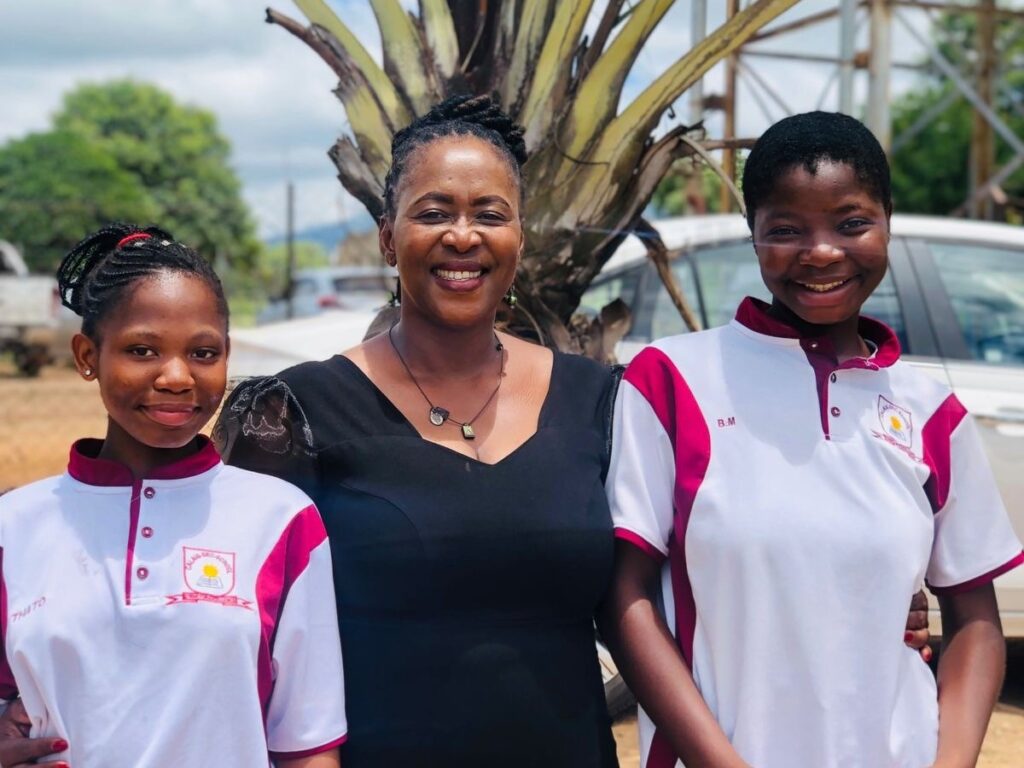
With 2024 off to a promising start, we wish Sr Sally, JJ, and all the team at Holy Family a bright year ahead!
IF YOU CAN, PLEASE SUPPORT THE HOLY FAMILY COMMUNITY
*
Nov 27, 2023
 Whistling Tunelessly
What is the meaning of happiness? Philosophers have speculated on the topic since the beginning of the human story. The answers provided to date are varied and many, but few would include driving along a dirt road, at night, in the rain, perched precariously on a half a driver’s seat (the rest has somehow mysteriously disappeared over time) in a pick-up truck that your average NCT technician would not only refuse to examine due to concerns for their personal safety, but would happy fire bomb with a Molotov cocktail from the comfort of their office. Yet, this is where I found myself a week ago on a Thursday night, whistling somewhat tunelessly as I drove alone. Happiness. It comes in the most surprising of places.
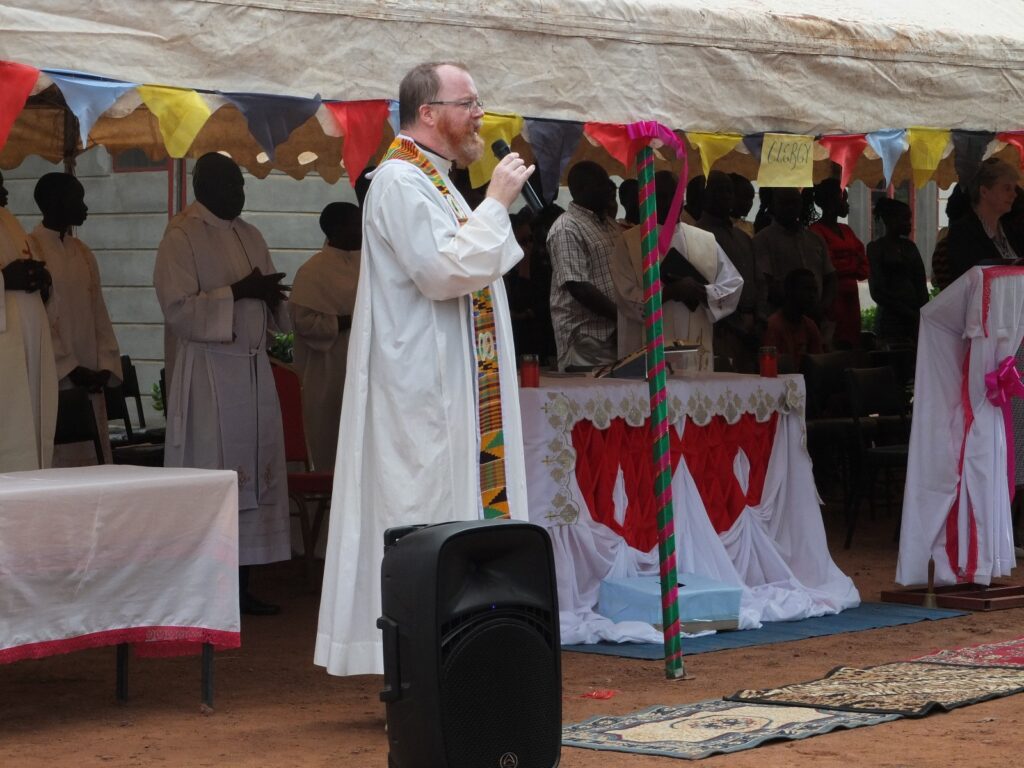
The destination for my rather battered pickup filled with tables was our clinic, which the following day, would the site of the Loreto Graduation. Over fifty young women marked the end of their formal studies with us and are now looking forward to their Senior Four national exams in just over a week. The day is not just a graduation though. It means much more, as it is a visible sign of how far these young women have come in the face of many challenges. The number of women successfully completing secondary school in South Sudan remains one of the lowest in the world according to the UN.
So, for these young women and their family who attended, it really is something to celebrate. It symbolises a continued new chapter in the history of the country, where slowly (in reality too slowly) women are making their own way in the world. The early mornings and late nights of study, along with their daily classes, have paid off. For their graduation their families all gathered to give thanks to God for what has been achieved in a Mass with Bishop Christian. After that, it was all singing, dancing, and sharing food with one another, but overall it was pure joy. Even the hardest of heart could not help to be happy there.
A Runaway Train
Only two days later, I had another interesting experience. On the Sunday evening I was getting ready for the week ahead, planning for the work in the University and the schools, when I began to feel unbearably cold. A quick check with one of our nurse practitioners confirmed my suspicions. I had my first bout of malaria. If you haven’t had it, it’s difficult to accurately describe. Your fever alternates between being roasting hot and then freezing cold. It’s bizarre to ever think you will end up shaking with the cold, in bed with two blankets, when the room temperature is well into the 30C, but there I was. Thankfully the Sisters moved me into the Convent to keep an eye on me. Hardly necessary in my opinion, as all the world knows how easy Irish men are as patients. You’d hardly think we were sick at all! I was thankful for their care by the time I finished.
Anyway, aside from fever, there are headaches, body aches, nausea, and lots of other things that are perhaps not fit to print. The vivid dreams were something of a shock. In one in particular I found myself at a Eucharistic Congress in a large stadium, when a runaway train barrelled through the proceedings. I hopped on for fun, managed to avoid hitting three trams, before eventually crashing the train just outside a Spar in Ireland. The manager came out to thank me, took my photo, gave me flowers and chocolate, and then charged me for both of them, which I thought was a bit much.
Whatsoever You Do
Now, rambling, nonsensical vivid dream aside, the harsh reality is that malaria is easily one of the main causes of child death in our area. It always bothered me that at the end of the first year pandemic we had six or seven viable vaccines available. Malaria kills over 600,000 people a year, but still we are waiting on a vaccine. Simply put, rich people don’t get malaria, so there is not impetus to find a cure in the same way we came together to tackle Covid. The part of malaria that is most responsible for deaths is the fever. Young children often don’t have the strength to deal with the high temperatures, but all that is needed to reduce their temperature is a simple paracetamol.
Today is the feast of Christ the King and our Gospel from Matthew is one of Jesus’ most challenging and pointed lessons. It’s the story of the final judgement and the separation of the sheep from the lambs. Those who cared for the poor, the naked, the imprisoned, and the sick are welcomed into the Kingdom of God as the Father’s own. Those who don’t, aren’t. But I think there is more to the story. When the people question Jesus, he replies, “Whenever you did this for the least of your brothers and sisters, you did it for me.” We are not just called to serve those in need. Jesus wants more. He wants us to recognise the presence of the divine in them. To see the image of God in everyone, especially those typically most despised. We are all one family. When one suffers, we all do.
It took five days for me to get over my first experience of malaria. I was lucky to have a clinic nearby, access to medication, and a caring community. Not everyone is. That is why the work of not just the school, but the clinic here is indispensable. Life has its highs and lows, and as we give thanks for one, we must remind ourselves to work to help those in the other. That is what Christ demands of us. Nothing less will do.
PLEASE HELP US TO TRANSFORM LIVES IN SOUTH SUDAN
Read more from Fr Alan’s missionary journey in South Sudan:
Jun 28, 2023
The world of education in Central Africa is small and even after only a short while you can link up with people from all over. With this in mind I Whatsapped a friend who is a religious priest who runs a Catholic university in Khartoum to see how he was doing. In short, not well at all. When he replied he said he had been forced to shutter the university and he is currently in Port Sudan. What state things will be in when he returns remains uncertain. What is certain is that the violence in Sudan has persisted far longer than even the most pessimistic estimations.
It was only last week when one of his students called into our office in the Catholic University of South Sudan, Rumbek. He was hoping to finish his degree in computers here, but the near totally absence of computers, coupled with prohibitively priced internet access, means that it was an impossibility. Still, he is happy to be home with his family safe and sound.
In the midst of the violence to the north, coupled with ongoing tensions in the Tigrayan region of Ethiopia, and following a terrible attack on a school in Uganda that even made the European news, it important to stop and be thankful of the peace that we currently enjoy here in South Sudan. Sure, we have our ups and downs. The University’s entire electricity supply, consisting of four old car batteries and a few solar panels, decided to give up the ghost, so there was a lot of running around to jury rig a solution. Still, in no time at all the printer was working again. No lights, but thankfully the lack of sunshine is rarely a problem here.
In the last few weeks we had loads to do, and the odd power cut aside, it was all good. We had a full week of teacher training for our Loreto Primary School teachers during a midterm break. It included class preparation and management, the history of the Sisters, and the nature of Catholic identity in school (run by myself). As you’d imagine the team of primary teachers are just the best. When you are singing the Gloria during the Mass they are the ones with their hands right up in the air. When you are dealing with over 1,300 boys and girls enthusiasm is a must!
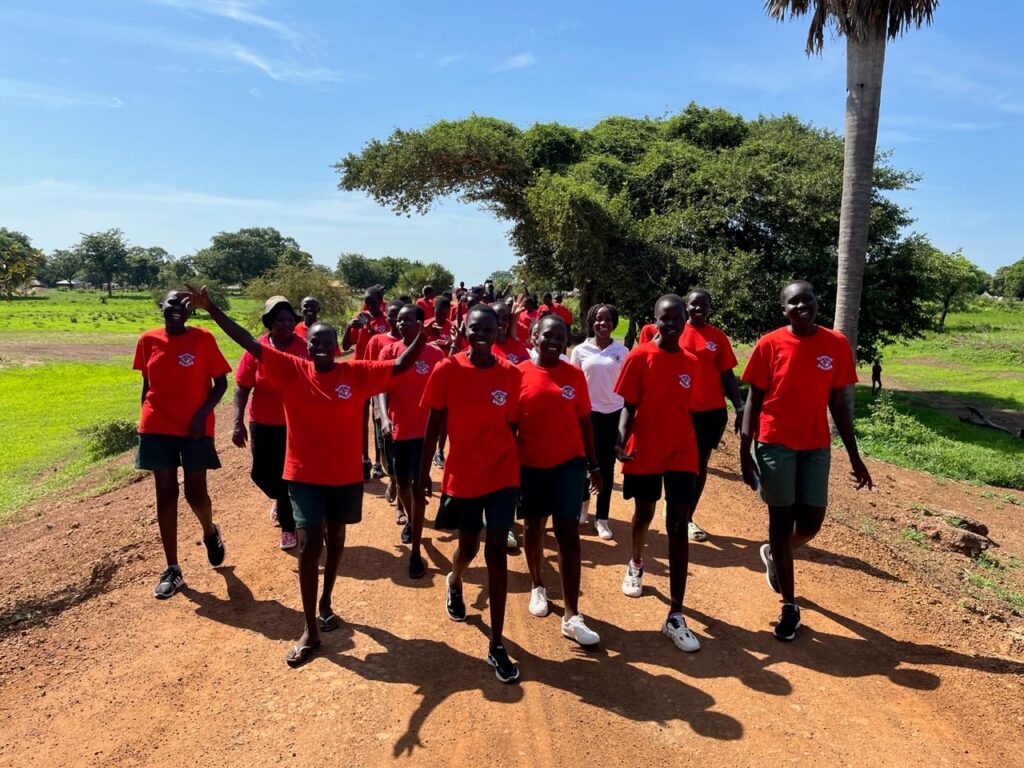
Peace happens quietly. It’s violence that makes most of the noise or at least it does most of the time. The Senior 4 Students (the equivalent of our sixth year class) take part in an annual peace walk. This year we walked the 45km from Loreto to our neighbouring parish of Cueibet. We had an early start, beginning at the school grotto with some prayer and then we hit the road. The girls were delighted to get out and about in the community. The people in turn were happy to meet our students, especially when they found out what they were doing. Not so long ago such a trip would have been impossible, due to the proliferation of small arms, banditry on the roads, and widespread insecurity. That day we made plenty of noise, singing and laughing as we walked, and before you knew it we arrived in Cueibet in time for a simple Mass for peace in South Sudan and a warm welcome from the people of the parish.
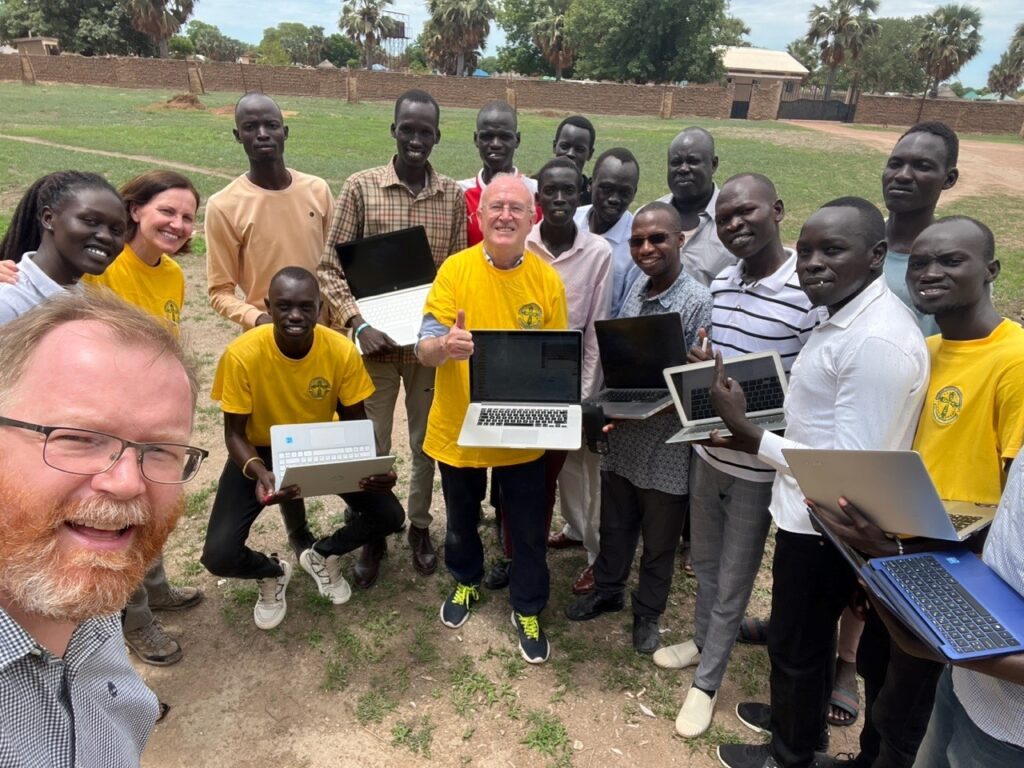
Since I wrote last we had two people over from Ireland, Linda Cardiff and Brendan Smith, to work with our University students on computer coding. We have just purchased two laptops, doubling the number of computers on the campus. You’d be amazed how many student you can fit around one screen when you really need to! We also had two new arrivals to the Diocese. The sister congregation of the MSCs, the Daughters of Our Lady of the Sacred Heart, welcomed two new members from Indonesia to their Mapourdit community. One is a trained teacher and the other an excellent nurse. We wish them the very best. Finally, as it is the season for cultivation, our students and teachers were out this week planting trees and weeding their plots of groundnuts, the national staple. Taken individually these are all small things, inconsequential in the eyes of national media its pursuit of the dramatic and the immediate. For the people of Lakes State though, this is significant, as after a long time of insecurity things are slowly building and life is flourishing. Peace is certainly a fragile thing, as evidenced by the world around us, but it is something worth fighting for.
Nhialic ke yin (or God Bless)
Fr. Alan
PLEASE HELP US TO TRANSFORM LIVES IN SOUTH SUDAN
Read more from Fr Alan’s missionary journey in South Sudan:
May 31, 2023
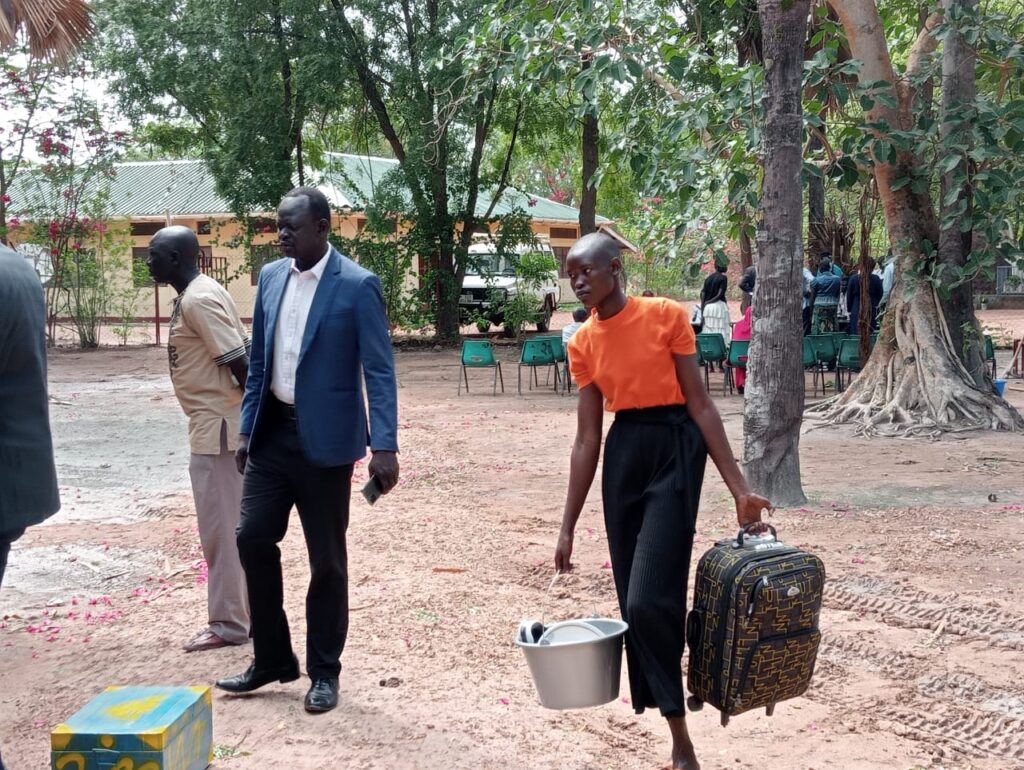
It has been heartening that many people got in touch over the last month to see how things were here, due to the ongoing civil war in Sudan. The situation there is dire, as rival leaders seek to gain as much power and wealth as possible, regardless of the suffering they cause. The only time they think of their people is when they look down to see who they are standing on. The loss of life in the conflict and the subsequent humanitarian crisis have sent shockwaves around an already fragile region.
Tens of thousands of the people now fleeing Sudan into northern South Sudan are themselves South Sudanese refugees who had fled South Sudan in 2013 because of the civil war here. Over the past few weeks they have arrived exhausted, carrying their meagre belonging, and uncertain what will happen next for them or their families. They have come at the worst possible time, as the rains have just started. Flooding usually cuts off the roads around the country, making it far more difficult to transport aid to impacted regions. To complicate matters further, by now people have used up most of their stores from last year’s harvest and it is a waiting game to see how long they can hold on for before they are forced by necessity to harvest what they have just planted. Finally, South Sudan’s largest export is oil from the north of the country, pumped through Sudan to Port Sudan. With the civil war this has all come to a sudden halt. This has fuelled hyperinflation nationally, making basic food and medicine prohibitively expensive in the market. The rains, which are seen as a real blessing, also unfortunately bring with them mosquitos and malaria. A single treatment for a family member can cost almost a month’s wages.
Uncertainty, however, is often the norm here and the South Sudanese are nothing if not resilient. How they manage continues to be something of a mystery to me. They have little alternative though. Within Loreto School and the University things are continuing as normal for the moment. In the school we have just welcomed a whole new group of first years students the Sunday before last. As part of our policy of cooperation and integration, they have come from all over the country, from different backgrounds and ethnic groups. They will be looked after through a fantastic system of school families, where students in second, third, and fourth year will act as their mother, grandmother, and great-grandmothers. Judging by the dancing and singing around the school last Saturday night I think they will be fine.
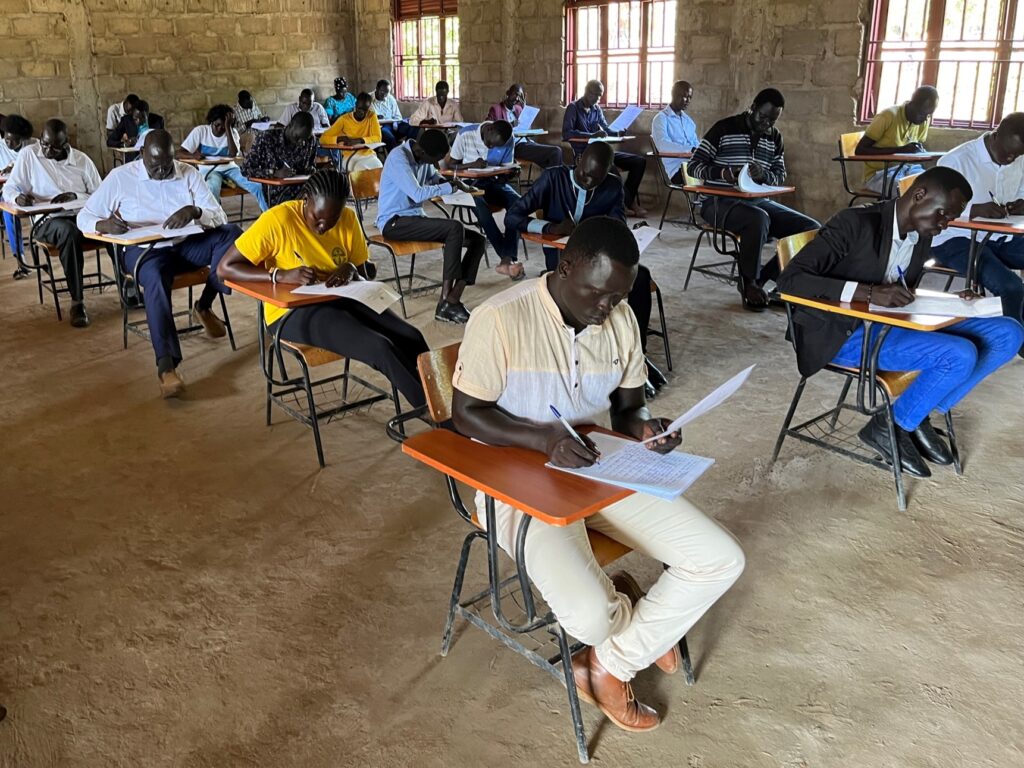
In the University we are coming to the end of our first term and are due to finish exams on Saturday. The number of students enrolled has almost doubled this year and there is already a healthy interest among people hoping to apply for our next academic year. Our focus remains on raising up business leaders, who will build the South Sudanese economy, and training teachers for secondary school. We hope to begin a new Bachelor of Education programme this year in commerce, religious education, and citizenship. In addition, we will continue growing the Catholic ethos aspect of our curriculum, with courses on ethics, theology, and introduction to the Bible as part of our ongoing human formation.
When trying to learn how to play the guitar years and years ago, one of the first songs I practiced was by the Beatles. The lyrics are known by practically everybody and they seem relevant to where I find myself today: Obladi, Oblada, life goes on, brah Lala, how the life goes on. As I said earlier, how things go on here at times, I’ll never understand, but people have no choice, so they just get on with it. Self-pity is a luxury no one can afford. They do the best they can with what they have and they do it better than I ever could. Let’s continue to pray for the situation in Sudan and to pray for each other.
Nhialic ke yin ( God bless),
Fr. Alan.
Read more from Fr Alan’s missionary journey in South Sudan:
PLEASE HELP US TO TRANSFORM LIVES IN SOUTH SUDAN